
To choose the right fabric for your project, match four things in this order: the use of the finished item, the weight of the fabric (measured in GSM), how it drapes, and its fiber content. A flowing evening gown needs a light fabric with soft drape like chiffon or charmeuse satin. A dining chair needs a heavy, tightly woven upholstery fabric rated for at least 15,000 double rubs. Once you know those four answers, shopping at an online fabric store becomes simple, because you can filter by type, content, and weight instead of guessing from a photo.
This guide walks you through every step, including the main fabric types, how much yardage to buy, and the quality checks that keep you from wasting money.
Start With the Project, Not the Fabric
Most sewing mistakes happen because someone falls in love with a print first and asks questions later. Flip the order. Write down what the finished piece has to do.
Ask yourself: Will it be washed often? Does it need to stretch? Will it hold a shape or fall softly? Will sunlight hit it every day? Will a child or pet touch it? Your answers rule out about 80 percent of the options right away, which makes the rest of the choice easy.
A costume worn twice can be made from something delicate. A toddler's blanket that goes through the wash weekly cannot. Same craft, very different fabric.
The Five Properties That Decide Everything
Every fabric on the market can be judged by five traits. Learn these and you can evaluate a fabric you have never touched before.
Weight (GSM). GSM means grams per square meter. As a rough industry guide, anything under 150 GSM is lightweight (blouses, linings, scarves), 150 to 350 GSM is medium weight (dresses, shirts, light jackets), and above 350 GSM is heavyweight (upholstery, coats, bags). Some suppliers list weight in ounces per square yard instead. Denim, for example, usually runs 10 to 14 oz.
Drape. Drape is how a fabric falls when you hold it up. Soft drape means it hangs close to the body and creates fluid folds. Stiff drape means it holds its own shape and stands away from the body. Chiffon has soft drape. Taffeta has stiff drape. Neither is better, they just make different silhouettes.
Stretch. Woven fabrics have little to no stretch unless spandex is added. Knits stretch naturally. Fabrics labeled 4 way stretch move both across the width and along the length, which is what activewear and swimwear need. Two way stretch moves in one direction only.
Fiber content. This determines how the fabric behaves in heat, water, and sunlight. Cotton breathes and absorbs moisture but wrinkles and can shrink 3 to 5 percent on the first wash. Polyester resists wrinkles and fading but traps heat. Silk is breathable and beautiful but water can spot it. Blends try to give you the best of both.
Weave or construction. A plain weave like poplin is flat and durable. Satin weave floats yarns on the surface, which creates shine but snags easily. Pile fabrics like velvet, minky, and faux fur have raised fibers and a nap direction that must run the same way on every pattern piece.
Natural, Synthetic, or Blended?
Natural fibers include cotton, silk, linen, and wool. They breathe well, feel comfortable against skin, and take dye in soft, rich tones. The trade off is that they wrinkle, shrink, and usually cost more.
Synthetic fibers include polyester, nylon, spandex, and acrylic. They are stronger, hold color longer, resist wrinkles, and cost less. Polyester is the most used fiber in the world by volume, which is why so much of the apparel and event decor market runs on it. The trade off is lower breathability.
Blends are the practical middle. Poly cotton gives you the comfort of cotton with fewer wrinkles. Nylon spandex gives you strong recovery for swim and dance wear. Silk blends add durability to a delicate fiber.
There is no universally superior option. A poly satin backdrop for a wedding hall is a smarter choice than pure silk, because it will not wrinkle on the drive over and it costs a fraction as much.
The Main Fabric Types and What They Are For
Cotton, Poplin, and Muslin
These are the beginner friendly workhorses. Cotton fabric is easy to cut, easy to sew, forgiving of mistakes, and washable. Poplin is a crisp plain weave used for shirts, tablecloths, and event decor. Muslin is loosely woven and inexpensive, which makes it the standard choice for a test garment, often called a toile. Sewing your first version in muslin before cutting expensive fabric is a habit every professional keeps.
Satin and Silk
Satin fabric is defined by its weave, not its fiber, so satin can be made from polyester, nylon, or silk. It gives a smooth, glossy face and a dull back. Charmeuse satin is the softer, more fluid version used for slip dresses, linings, and bridal gowns. Silk fabric is the luxury option with unmatched sheen and temperature control, best kept for pieces that will be dry cleaned rather than machine washed.
Both need sharp, fine needles and careful pinning inside the seam allowance, since holes do not close up.
Chiffon and Sheer Fabrics
Chiffon fabric is light, semi transparent, and famous for its floating drape. It is used for overlays, sleeves, scarves, and layered skirts. Sheer fabrics like organza and tulle are stiffer and add volume, which is why they show up in veils, tutus, and ceremony backdrops. Sheers almost always need a lining or an underlayer.
Velvet
Velvet fabric has a dense pile that catches light differently depending on direction. Stretch velvet suits fitted dresses and dance costumes. Non stretch and crushed velvet suit curtains, cushions, and formal wear. Cut every piece with the nap running the same way, or your finished garment will look like two different colors.
Spandex and Stretch Fabrics
4 way stretch fabric is essential for swimwear, leggings, leotards, and anything that must move with the body and snap back. Look for good recovery, meaning the fabric returns to its original size after being pulled. Sew stretch fabrics with a stretch or ballpoint needle and a zigzag or overlock stitch so seams do not pop.
Lace and Embroidery
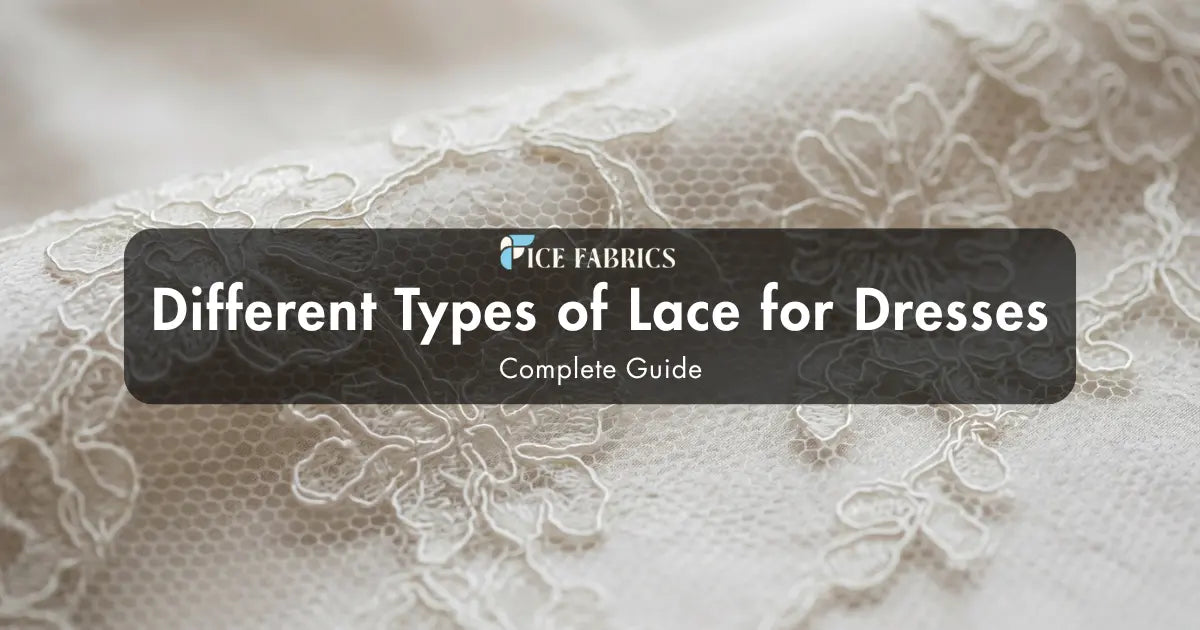
Lace fabric brings texture and detail to bridal gowns, veils, and formal wear. Corded and beaded laces are heavier and need a stable base fabric beneath. Check whether the lace has a finished scalloped edge, because that edge can be used as a hem and save you hours of work.
Sequin and Specialty Fabrics
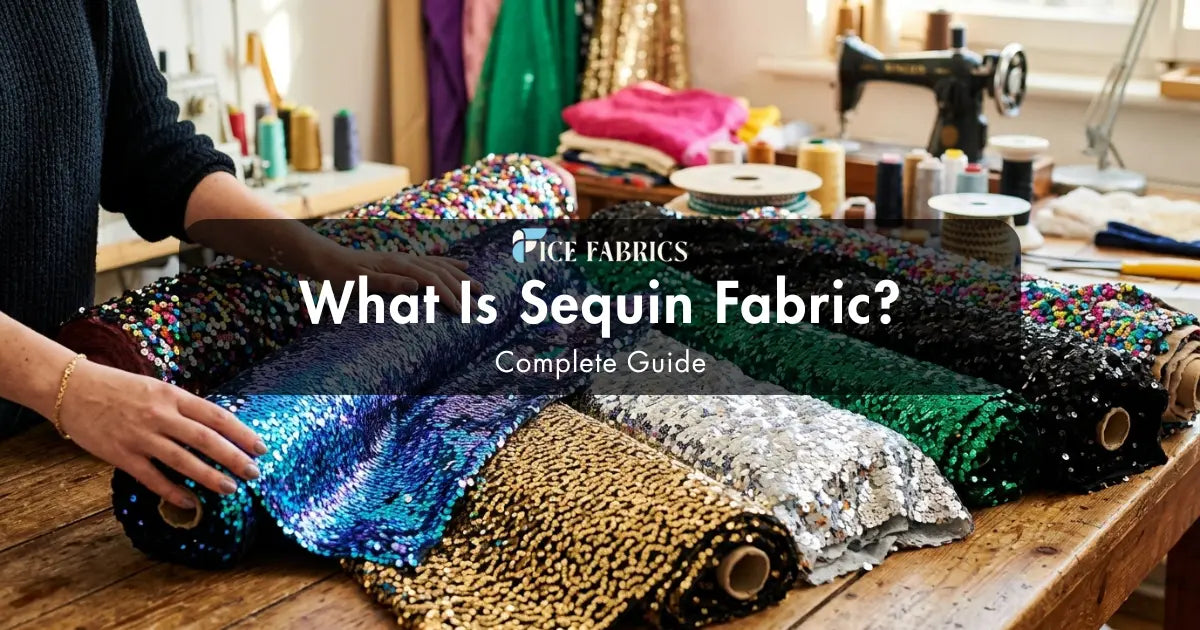
Sequin fabric is built for stage, party, and holiday pieces. It is heavy, it dulls scissors and needles fast, and it should be cut with the sequins removed from the seam line where possible. Stretch sequin versions are easier to fit on the body.
Faux Fur and Minky
Faux fur fabric suits coats, throws, costumes, and photography props. Minky fabric is a soft polyester pile that has become the default for baby blankets and quilt backings because it washes well and stays soft.
Both shed while cutting, so cut from the back with a craft knife or small scissors, and hold the seams with clips instead of pins.
Felt
Felt fabric is non woven, which means it does not fray and needs no hemming. That makes it the top pick for school projects, ornaments, applique, and kids' crafts.
Upholstery and Drapery
Upholstery fabric is judged by abrasion resistance, tested with the Wyzenbeek method (ASTM D4157) or the Martindale method (ASTM D4966). The Association for Contract Textiles considers 15,000 double rubs the standard for heavy duty residential use, and commercial seating usually calls for 30,000 or more. Drapery fabric is chosen for weight, light control, and fade resistance. Blackout linings block light and also cut noise and heat loss.
How Much Fabric Do You Need?
Most fabric sells in 45 inch or 60 inch widths, and it is sold by the yard or the meter. Your pattern envelope lists yardage for both widths, so check which one applies before ordering.
Three rules will save you money and frustration. Add 10 to 15 percent extra for any fabric that shrinks, especially cotton. Add extra for directional prints, plaids, and stripes, since matching the pattern across seams wastes fabric. For curtains, plan on 2 to 2.5 times the width of your window so the finished panels look full instead of flat.
If you are unsure, buy slightly more. Dye lots vary, and a second order of the same color may not match the first.
Check Quality Before You Commit
Order swatches first. This is the single most useful habit when buying fabric online. A swatch tells you the true color under your own lighting, the actual hand feel, and the real weight. Photos cannot do that.
When your swatch arrives, run three quick tests.
- Stretch and recover. Pull it gently in both directions and see if it springs back or stays distorted.
- Rub test. Rub a damp white cloth on the surface. Color coming off means poor colorfastness, tested in the industry using AATCC methods for crocking and laundering.
- Light test. Hold it up to a window to see how sheer it really is and whether it needs lining.
Also read the care instructions and the fiber content label rather than relying on the product name alone. Fabric names are marketing terms, but fiber percentages are facts.
A trustworthy online fabric store will publish fiber content, width, weight, stretch percentage, and care details on every listing, offer swatches, and back it up with a clear return policy. If those details are missing, treat that as a warning sign.
When Wholesale Fabric Makes Sense
If you are making more than a handful of items, buying wholesale fabric by the bolt lowers your cost per yard significantly and guarantees a consistent dye lot across the whole run. That consistency matters more than most people expect. Event planners covering fifty tables and small brands producing a size run cannot afford color drift between orders.
Wholesale suits event decorators, wedding planners, costume departments, upholsterers, and growing clothing labels. It does not suit a one time home project, since bolts typically run 25 yards or more. Ice Fabrics serves both sides, with retail cuts by the yard for hobbyists and a dedicated wholesale dealer program for businesses buying in volume.
Mistakes Beginners Make Most Often
Skipping the pre wash is the biggest one. Cotton and cotton blends shrink, and a garment that fits at the fitting stage will not fit after its first laundry cycle.
The second is ignoring nap direction on velvet, minky, and faux fur. The third is choosing a fabric that is too light to hold structure, which is why a tailored blazer cut from a soft rayon never looks right. The fourth is using standard needles on stretch or coated fabrics, which causes skipped stitches and holes.
None of these are hard to avoid. They just require deciding on the fabric before you fall for the print.
The Short Version
Choosing fabric is a process of elimination. Define the project, decide the weight and drape it needs, confirm whether stretch is required, then pick a fiber content that survives the washing and wear the item will face. Order a swatch before committing to yardage.
Buying from a specialist online fabric store like Ice Fabrics makes that process faster, because the catalog is organized by type, content, and color, and every listing carries the technical details you need to make the call with confidence.