
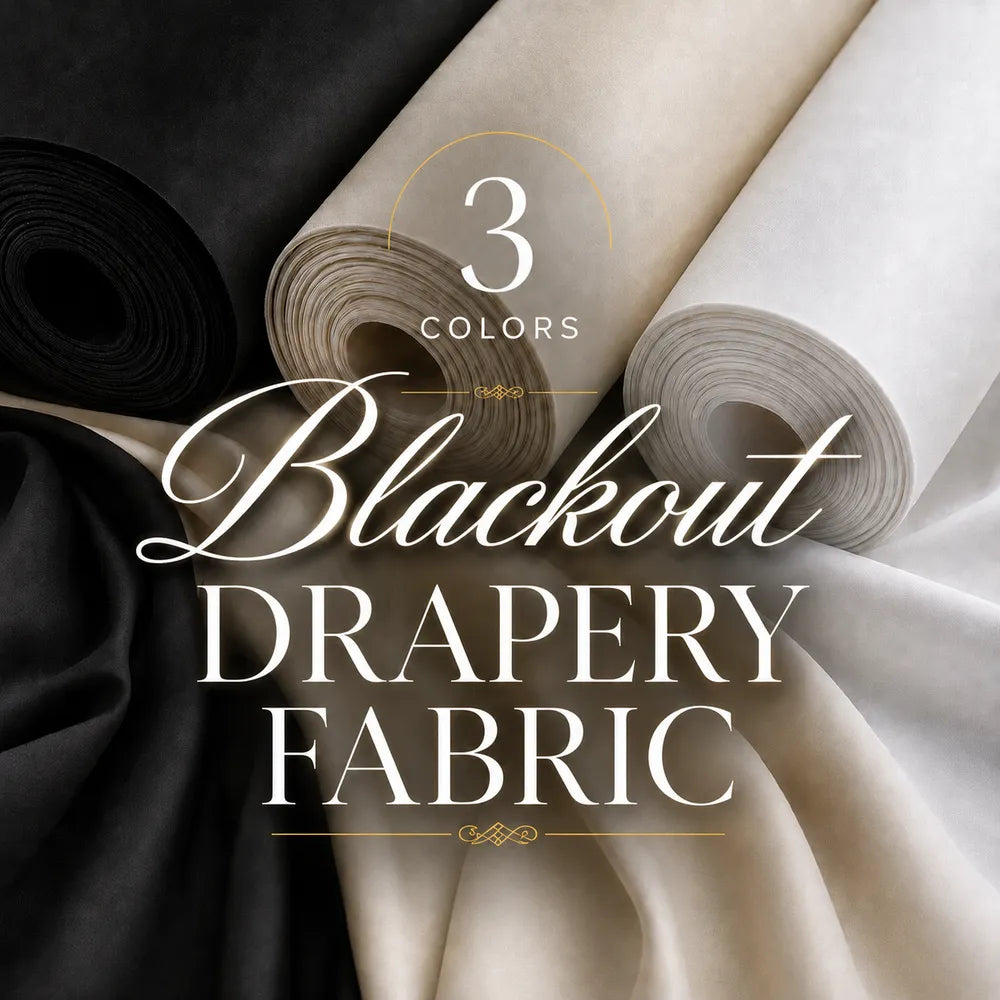
If you want a room that stays dark, quiet, and cool no matter what time of day it is, blackout drapery fabric is the answer. This collection brings together heavy-duty blackout curtain material designed to block sunlight, reduce outside noise, and give your windows a clean, finished look. Whether you're sewing curtains for a bedroom, setting up a home theater, or working on a commercial project like a hotel or theater stage, this is the fabric that gets the job done right.
Below, we'll walk you through everything you need to know about blackout drapery material: what it is, how it works, the different types available, and how to pick the right one for your space. We'll also answer the most common questions people ask before buying, so you can shop with confidence.
What Is Blackout Drapery Fabric?
Blackout drapery fabric is a type of curtain material made with a special weave or coating that stops light from passing through. Unlike regular curtain fabric, which only dims a room, true blackout curtain material fabric blocks light almost completely, usually 90% to 100%, depending on the fabric weight and construction.
This type of fabric is usually made using one of three methods:
- Tightly woven fabric – The threads are woven so close together that light simply can't pass through the gaps.
- Foam-backed fabric – A layer of foam is added to the back of the fabric, which blocks light and adds insulation.
- Multi-layer or coated fabric – Several layers of fabric are bonded together, or a special coating is applied, to create a fully opaque material.
All three methods work well, but they each have slightly different textures, weights, and price points. We'll cover the differences in more detail below so you can decide which one fits your project.
Why People Choose Blackout Curtain Material
People don't just buy blackout drapery fabric because they want a dark room, though that's a big reason. Here are the most common reasons customers pick this fabric for their homes and businesses:
Better sleep. Light exposure at night can interrupt your sleep cycle. A fully dark room, created with proper blackout curtain material, helps you fall asleep faster and stay asleep longer.
Energy savings. Blackout fabric adds an extra layer between your window and your room. In summer, it blocks heat from the sun. In winter, it helps keep warm air inside. Over time, this can lower your heating and cooling bills.
Noise reduction. Because blackout drapery material is thicker and denser than regular curtain fabric, it also absorbs sound. This makes it a popular choice for city apartments, nurseries, and home offices.
Privacy. Thick, opaque fabric means people outside can't see into your home, even with the lights on inside at night.
UV protection. Sunlight can fade furniture, flooring, and artwork over time. Blackout curtain material fabric blocks UV rays, helping protect your interior from sun damage.
A clean, upscale look. Beyond the practical benefits, blackout drapery fabric has a heavier drape and a more polished look than thin, sheer fabrics, giving any room a more finished, hotel-like feel.
Types of Blackout Drapery Fabric in This Collection
Not all blackout fabric is the same. Here's a simple breakdown of the main types you'll find in this collection, so you know exactly what you're getting.
100% Blackout Fabric
This is the darkest option available. It blocks nearly all outside light and is ideal for bedrooms, media rooms, and night-shift workers who sleep during the day.
Foam-Backed Blackout Fabric
This fabric has a soft foam layer on the back. It's a good middle-ground option: it blocks most light, adds a bit of cushioning to the drape, and helps with insulation and sound dampening.
Blackout Lining Fabric
This is used as a backing layer sewn behind a decorative face fabric. It's a great option if you already love a certain print or color but want to add blackout functionality without changing the look of your curtains.
Thermal Blackout Fabric
Built with insulation in mind, this fabric is a favorite for anyone trying to cut energy costs. It blocks light while also regulating room temperature more effectively than standard blackout material.
Textured and Patterned Blackout Fabric
Blackout doesn't have to mean plain or boring. This collection includes textured weaves, solid colors, and patterned designs, so you don't have to choose between function and style.
How to Choose the Right Blackout Curtain Material Fabric
Picking the right fabric depends on your room, your goals, and your budget. Here are a few simple questions to ask yourself before you buy:
How dark do you need the room to be?
If you're setting up a home theater or a nursery for a baby who naps during the day, go with 100% blackout fabric. If you just want to reduce glare and add some privacy, a lighter blackout or foam-backed option might be enough.
Do you want a specific color or pattern?
If style matters as much as function, look at blackout lining fabric. You can pair it with almost any decorative fabric to get blackout performance without giving up your favorite print.
Is energy efficiency a priority?
If you're trying to lower utility bills, thermal blackout fabric is worth the extra look. It's designed specifically to manage indoor temperature.
What's the weight and drape you're looking for?
Heavier blackout fabric hangs with a fuller, richer look but may need sturdier curtain rods and hardware. Lighter blackout material is easier to work with for DIY projects and sews more easily on a home machine.
Where will the curtains be used?
Bedrooms usually call for maximum darkness. Living rooms may benefit from a fabric that still lets a little light filter through for a softer, ambient feel.
Blackout Drapery Fabric by the Yard: Great for DIY and Custom Projects
This collection is sold by the yard, which makes it a solid option for DIY sewers, upholsterers, interior designers, and small businesses. Buying by the yard means you can order exactly what you need, whether you're making a single curtain panel or working on a large commercial order for hotel rooms, event spaces, or theaters.
Common uses for blackout drapery fabric by the yard include:
- Custom curtain panels and drapes
- Roman shades and roller shades
- Room dividers
- Photography backdrops
- Home theater walls and ceilings
- Stage curtains and backdrops
- Baby nursery blackout curtains
- RV and camper window coverings
Caring for Your Blackout Curtain Material
Taking care of blackout fabric properly helps it last longer and keeps it performing well. A few simple tips:
- Check the care label before washing, since foam-backed and coated fabrics often need spot cleaning or gentle hand washing instead of machine washing.
- Avoid high heat when ironing, especially with foam-backed or coated fabric, as heat can damage the blackout layer.
- Vacuum with a soft brush attachment occasionally to remove dust buildup between deep cleanings.
- Air out curtains regularly if they're in a room with high humidity to prevent musty odors.
Frequently Asked Questions
What is the difference between blackout fabric and regular curtain fabric?
Regular curtain fabric only dims light, while blackout drapery fabric is designed to block almost all light from passing through. Blackout fabric is also usually thicker and better at reducing noise and heat transfer.
Does blackout curtain material really block 100% of light?
Fully blackout-rated fabric blocks close to 99–100% of light when installed properly, with no gaps around the edges. Some light may still enter around the sides or bottom of the curtain if it's not mounted close to the wall or window frame.
Can blackout fabric help with energy bills?
Yes. Blackout drapery material adds an insulating layer over your windows, which can help block heat in summer and retain warmth in winter, potentially lowering energy costs over time.
Is blackout fabric good for a nursery?
Yes, it's one of the most popular uses for blackout curtain material. It helps babies and toddlers nap and sleep through the day by keeping the room dark.
Can I sew blackout fabric on a regular home sewing machine?
Most blackout drapery fabric, especially the lighter and mid-weight options, can be sewn on a standard home machine. Heavier or foam-backed fabric may need a slightly stronger needle and a bit more patience, but it's still very doable for a confident DIY sewer.
How much fabric do I need for a pair of curtain panels?
This depends on your window size and how full you want the curtains to look, but a common starting point is two to three times the width of your window, plus extra length for hems. It's always a good idea to measure your specific window before ordering.
Shop Blackout Drapery Fabric with Confidence
Choosing the right blackout curtain material doesn't have to be complicated. Once you know what you need, full blackout, thermal performance, a specific color, or a certain texture, the rest is just picking the fabric that fits your project.
This collection is built to cover all of those needs in one place, with a range of blackout drapery fabric options for home use, DIY projects, and commercial orders. Every fabric is chosen for real performance, not just marketing claims, so you can trust that what you're buying will actually block light, reduce noise, and hold up over time.
At Ice Fabrics, we focus on offering fabric that's easy to work with, reliable, and priced fairly, whether you're ordering a single yard for a small project or bulk fabric for a business order. Browse the full blackout drapery fabric collection today and find the right blackout curtain material for your next project.