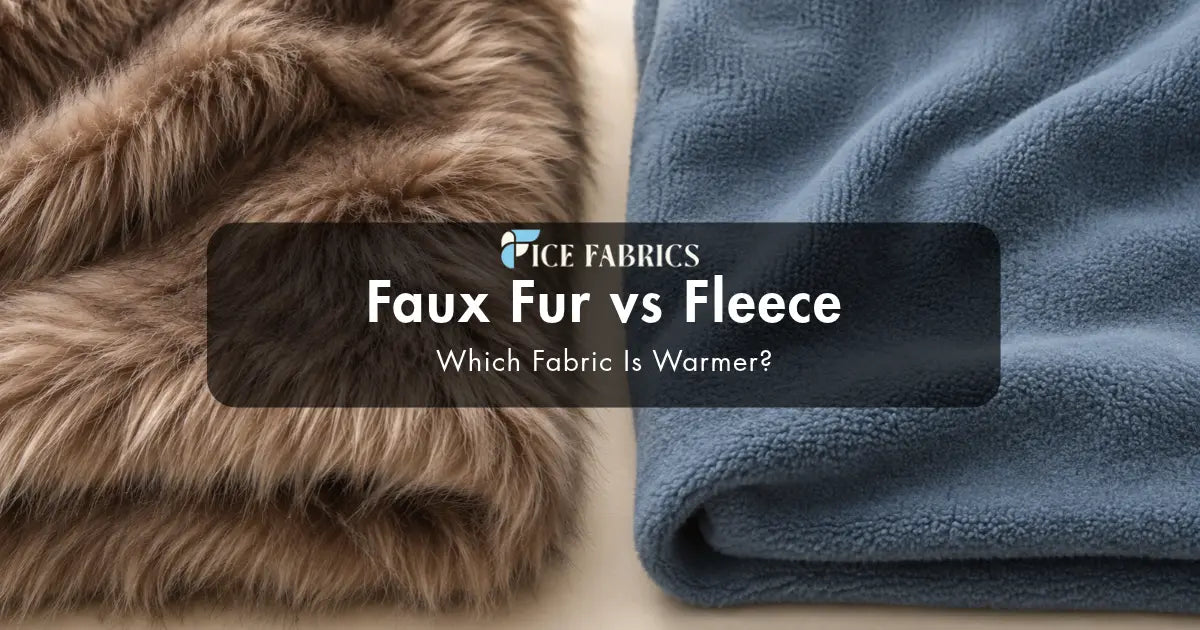

Dense, short-pile polyester is the best faux fur material for most beginners. It works well for pillows, bags, and simple garments because the shorter fibers are easier to keep out of seams and zippers. For a natural-looking coat or hood trim, compare acrylic or modacrylic blends with a dense base and longer tips. For a shaggy costume or statement piece, choose a long pile that gives you the shape and movement you want.
The fiber label is a starting point. Before you buy, check how well the fur covers its backing, how the fabric hangs, and how thick it gets when folded. Those three checks can tell you whether a swatch that looks great online will work for your project.
Polyester, Acrylic, or Modacrylic: Which Should You Choose?
Faux fur fabric has two main parts. The pile is the layer of fibers you see and touch. The backing holds those fibers in place and affects how the fabric stretches, drapes, and behaves under a sewing machine. If a listing gives a fiber percentage, check whether it refers to the pile, the backing, or the whole fabric.
Polyester for Everyday Projects
Short-pile polyester is a good first choice for a zippered pillow, a simple vest, or a soft bag. Shorter fibers generally leave less pile to manage at corners and seams. For a blanket, look for a soft, flexible backing so the finished piece can fold and hang comfortably.
Polyester comes in a wide range of textures. A smooth plush and a coarse shag can carry the same fiber label and feel quite different. If you’re making a throw that will be washed often, check the care directions before ordering. The instructions for the specific fabric tell you what washing and drying methods you can use.
Acrylic for Fluffy Texture
Consider acrylic when you want a fuller surface for a roomy vest, a decorative cushion, or a costume. Hold the swatch at arm’s length as well as up close. A texture that looks subtle in a close-up may read as much bolder across an entire garment.
Fold two layers together and pinch them where a seam would sit. On a loose vest, a thick seam may be easy to work around. On a fitted sleeve or a narrow collar, that same thickness can make the fabric harder to turn and shape.
Modacrylic Blends for a Natural Fur Look
For a realistic finish, compare modacrylic blends that have a dense, short base and finer fibers that extend beyond it. Those longer fibers are often called guard hairs because they mimic the outer hairs of animal fur. A slight change in color from base to tip can add depth, especially in fox- and wolf-inspired styles.
Under U.S. textile labeling rules, acrylic contains at least 85% acrylonitrile by weight in the fiber-forming material. Modacrylic contains at least 35% and less than 85%. Those percentages describe the fiber’s makeup. For a coat or trim, judge the look and feel by comparing swatches in daylight.
Read More: Why Does Faux Fur Fabric Stretch Out?
Which Pile Length Is Best for Your Project?
Short, medium, and long are useful shopping terms, but the same label can cover different measurements from one seller to the next. Compare the actual length in inches or millimeters. A side-view photo also helps you see whether the fibers stand up, curl, or fall to one side.
| Project | Best Starting Point | What to Check |
|---|---|---|
| Fitted jacket or vest | Short-to-medium pile with a flexible backing | Fold two layers together to check bulk at the armhole and side seam. |
| Full-length coat | Dense medium-to-long pile with a soft drape | Hold the swatch by one edge and see how easily it hangs and folds. |
| Hood trim or collar | Medium-to-long pile with good coverage | Wrap it around a curved edge and check whether the backing shows. |
| Everyday pillow cover | Dense short pile | Test a corner and check whether loose fibers catch in the zipper. |
| Throw blanket | Soft short-to-medium pile | Check how it feels against your skin and how it needs to be cleaned. |
| Costume or cosplay | Long pile for volume and short pile for shaped details | Check whether the pile keeps the outline of the piece visible. |
You can mix pile lengths in the same project. Short pile can keep the shape around a costume’s eyes clear, while longer fur can add volume around the sides. On a jacket, a shorter pile can make pockets and closures easier to use, while a fuller collar adds texture.
Check the nap, or the direction the fibers lie, before working out yardage. Stroke the fabric both ways under the same light. Pieces cut in opposite directions may look like different shades once sewn together. Mark the direction on the backing and lay out your pattern pieces with that direction in mind.
How Can You Tell If Faux Fur Is Good Quality?
Test a swatch where the finished item will bend, rub, or stretch most. A faux fur material can look full on a table and show its backing over a stuffed pillow corner. A soft swatch can also hang stiffly when you hold it by one edge. A few quick checks make those differences easier to spot.
Bend the Swatch to Check Coverage
Part the fibers with your fingers and let them fall back into place. Then bend the sample over your knuckles. If the backing shows easily around the bend, it may also peek through on a rounded hood, a stuffed cushion, or a fitted elbow. For a loose garment or flat display panel, check how the pile covers the backing when it hangs at rest.
Check Whether the Surface Keeps Shedding
Rub the center of the sample against a cloth in a contrasting color. Brush away loose fibers and repeat the test. Freshly cut edges may release strands left over from cutting, so check the intact surface as well. If the center keeps dropping fibers under light rubbing, think about what the finished piece will touch. A cream collar worn over a black coat can make even light shedding easy to see.
Check How the Backing Stretches and Recovers
Pull the sample gently from side to side, then from top to bottom. When you let go, see whether it returns to its original shape. Some give can help fabric follow a curve. A backing that stretches out and stays stretched can make it harder to keep a zipper flat or line up stripes. If the pattern calls for stretch in a certain direction, check your swatch against that requirement.
Use GSM to Compare Weight
GSM means grams per square meter. A fabric listed at 750 GSM weighs about 43% more per square meter than one listed at 525 GSM. That difference is easy to overlook on a small swatch and can matter across a long coat or a large throw. GSM includes the backing, so use the number to compare weight and the swatch to compare softness, coverage, and drape.
What Should You Check Before Buying Faux Fur by the Yard?
Test the Thickest Seam First
The best faux fur fabric for a project needs to work at its thickest point. Sew a scrap with the same layers you’ll use in the finished piece. For a coat, that could mean two layers of fur and the lining at the collar. For a cushion, try a short seam alongside the zipper and open and close it a few times. You’ll quickly see whether the pile gets caught.
When cutting long pile faux fur, work from the backing side. Use small, sharp scissors to snip through the backing while keeping the fur out of the blades. Tuck longer fibers away from the seam before you sew. After stitching, gently tease out any caught fibers so the join blends into the surrounding fur.
Check Care Before You Cut
Read the care instructions for the exact fabric. If washing is allowed, wash and dry a scrap as directed. Compare it with an untreated piece to see whether the pile clumps or the backing changes shape. For a lined coat or a two-sided throw, check that the lining and outer fabric can be cleaned the same way.
Ask About Abrasion for Upholstery
For a chair or bench that gets daily use, ask whether the seller recommends the fabric for upholstery and can share test results. ASTM D4966, the Martindale abrasion test, measures how a textile responds to controlled rubbing.
Compare results from the same test method and check what counted as the endpoint. A lab result helps compare tested fabrics. Daily wear also depends on where and how the piece is used and cleaned.
Also Read: What Is Mohair Faux Fur?
Common Questions About Faux Fur
What Faux Fur Looks Most Like Real Fur?
Look for a dense base, fibers of different lengths, and subtle changes in color. Fox-inspired fur often has longer tips over a full base, while rabbit-inspired styles tend to have a smoother, more even surface. Compare samples in daylight from the front and the side to see how the fibers catch the light.
Is Long-Pile Faux Fur Warmer Than Short-Pile Faux Fur?
A longer pile can give a coat more volume, but warmth depends on the whole garment. Check the density of the pile, the backing, the lining, and how much air can enter at the cuffs and front opening. If you’re choosing between two options, compare them with the lining you plan to use.
How Much Faux Fur Should You Buy?
Start with the usable width and lay out your pattern with the nap running in the chosen direction on every visible piece. If the faux fur fabric by the yard has stripes or an animal print, leave room to match the pattern where it matters, such as across the front of a jacket. Both nap direction and print matching can increase the yardage you need.
Find the Right Fur Before You Cut
Start with the part of your project that will get the most handling. For a coat, check how the pile looks and feels around the cuffs. For a pillow, test the corners and zipper. For a costume, check whether the pile holds the shape you want to show. If two swatches look equally good, choose the one that works better at that spot.
Explore Ice Fabrics to compare smooth plush, animal-inspired textures, and shaggy mohair long-pile options by the yard. Once you’ve picked a texture, check the listed pile length, width, and care details to see how that faux fur material fits your project.